Notes from the cutting table
Sewing from photos, fitting real bodies, choosing fabric and projects worth making.
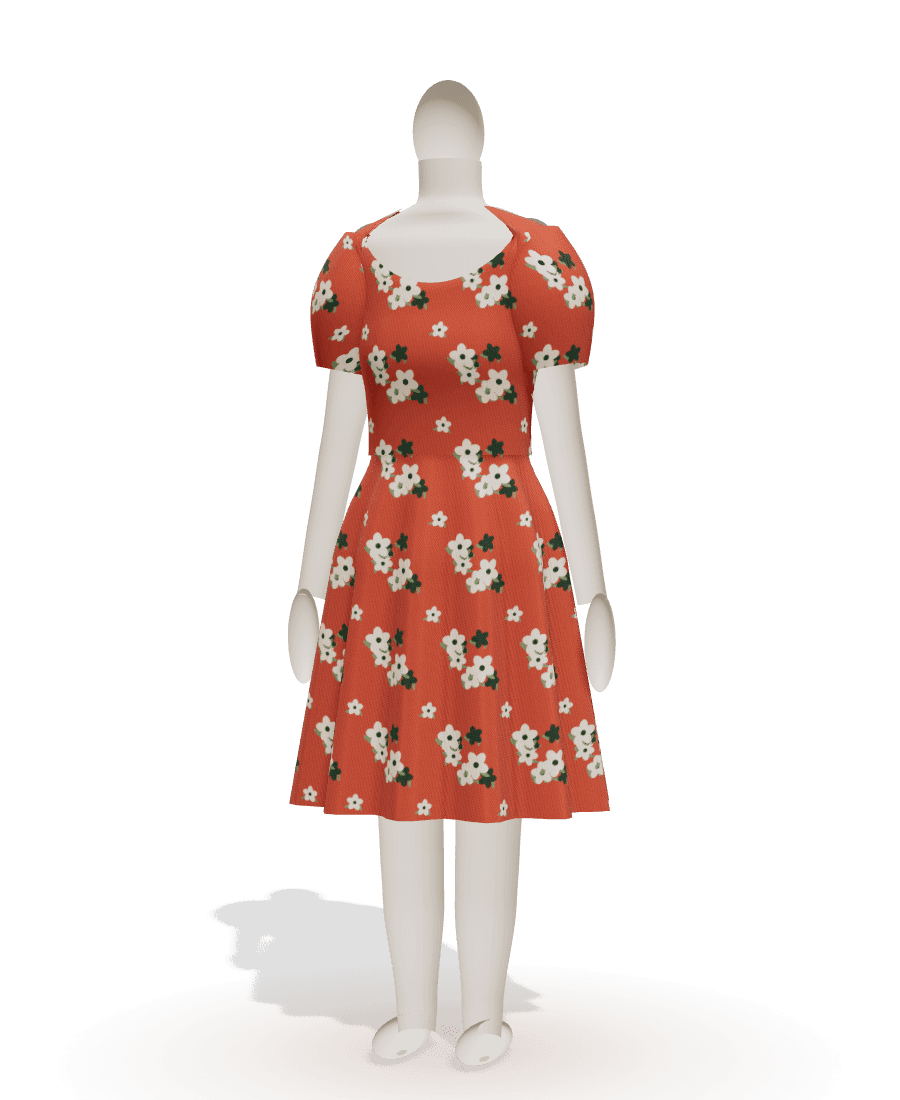
Can you make a sewing pattern from a photo? Yes, here is how
Yes. A photo shows the garment's shape, length, neckline and fullness; your measurements give the sizes. Three ways to turn a picture into a pattern that fits.
Read more →From photo to pattern
How to copy a dress you love without taking it apart
Trace a favorite dress with the rub-off method, measure it to capture its ease, or redraft it from a photo and your measurements. Step by step, no unpicking.
How to recreate a celebrity or runway look with your own pattern
Break the look into a garment type and a few design choices, scale its proportions to your body and match the fabric's drape. A practical method, step by step.
From a Pinterest board to a handmade wardrobe: a practical plan
Turn a Pinterest board into clothes you sew: tally your pins, find 5 to 8 base garments, plan colors and fabric, then sew in an order that builds your skills.
Saw an outfit on Instagram? Here is how to sew it
Save the post, screenshot the clearest frame, identify the garment and its fabric, then get a pattern drafted to your measurements. A step-by-step method.
Screenshot to sewing pattern: tips for the best results
Pick a sharp, front-facing frame showing the whole garment, crop clutter but keep the hem, avoid wide-angle selfies, and add a few words about hidden details.
Beginners
Learning to sew as an adult: a realistic 30-day plan
With 20 to 45 minutes most days, an adult beginner can go from threading a machine to wearing a first garment in 30 days. A day-by-day plan with real projects.
15 best first sewing projects for beginners
Fifteen beginner sewing projects in the order that builds skills, from a 30-minute scrunchie to pull-on trousers, with the time, fabric and skill for each.
40 sewing terms every beginner should know
Seam allowance, grainline, ease, notches, staystitching: 40 sewing terms explained in plain English, grouped by the moment you meet them in a project.
12 beginner sewing mistakes and how to avoid them
Skipping the test square, cutting off grain, never pressing: the 12 most common beginner sewing mistakes, why they happen and the habit that prevents each one.
How long does it take to learn to sew?
You can sew a straight seam in an afternoon and a first garment in two or three weekends. A realistic timeline in hours, from first seam to fitted clothes.
Setting up a sewing space in a small apartment
A sewing corner needs less room than you think: a stable table edge, a cutting surface, an iron and one storage cart. Layouts, sizes and tricks for small homes.
Is sewing your own clothes cheaper? An honest breakdown
Sewing is rarely cheaper than fast fashion, but often cheaper than quality clothes in the same fabric. Costs per garment, start-up costs and where you save.
Sewing with kids: easy projects and safety
What children can sew at each age, from felt and plastic needles at four to a machine at eight or ten, with project ideas and the safety rules that matter.
Fit
Why made-to-measure patterns fit better than standard sizes
Standard sizes assume one body shape and height; made-to-measure patterns start from your numbers. Where sizes fail, what each fixes, and when sizes are fine.
Why store-bought clothes do not fit (and handmade can)
Ready-to-wear is graded from one fit model for an average height and shape. Why that misses most bodies, what sizes really measure, and how sewing fixes it.
Sewing for plus-size bodies: patterns that start from you
Plus-size patterns fit best when drafted from your own measurements, not graded up from a size 10. What to measure, how much ease to add and what to sew first.
Petite and tall: the length adjustments that matter
Patterns assume a height near 168 cm (5 ft 6 in). Where petite and tall sewists should shorten or lengthen: bodice, sleeves, rise, legs and hem, with numbers.
Full bust adjustment explained, and when you can skip it
An FBA adds room over the bust to a pattern chosen by your high bust. How to tell if you need one, how much to add, how it is done and when you can skip it.
How to measure yourself alone, accurately
Measuring yourself for sewing without help: the tools, the order, solo tricks for back waist length, shoulders, inseam and crotch depth, and common mistakes.
EU, US and UK sewing sizes: why they never match
A UK 10 is a US 6 and a French 38, but a German 36, and often a 12 in a sewing pattern. Why sizes never match, with a conversion chart in cm and inches.
How much ease? An ease chart by garment type
How much ease to add at the bust, waist, hip and sleeve for fitted, regular, relaxed and oversized garments, in wovens and knits, with charts in cm and inches.
Sewing for men: tees, shorts, sweatshirts and more
What to sew for men, how men's patterns differ from women's, which measurements and fabrics to use, and how to make tees, shorts and sweatshirts look right.
Fabric
The best fabrics for beginners (and the ones to avoid)
The easiest fabrics to sew as a beginner, with weights in GSM and oz/yd², the fabrics to avoid at first and why, and how to match fabric to your first projects.
Sewing with linen: crisp, comfortable garments
How to sew linen: which weight for which garment, pre-washing and shrinkage, cutting on grain, needles and stitch length, seam finishes and pressing.
Sewing viscose (rayon) without tears
How to sew viscose (rayon) calmly: pre-washing and shrinkage, cutting slippery fabric, needles, staystitching, seam finishes, hems and pressing.
Jersey knit for beginners: T-shirts that do not wave
Why jersey seams go wavy and how to stop it: which knit to buy, the stretch test, needle and stitch settings, neckband ratios and stable T-shirt hems.
Sewing with denim: needles, thread and seams
Sewing denim on a home machine: denim weights in oz and GSM, needle and thread sizes, stitch lengths, thick seams, flat-felled seams and pre-washing.
Sustainable fabric: what to buy and what to reuse
How to choose sustainable sewing fabric: fiber trade-offs, what GOTS, OEKO-TEX, GRS and FSC mean, buying the right amount, and reusing deadstock and scraps.
Reading fabric descriptions: GSM, oz, drape and stretch
How to read a fabric listing: what GSM means and how it converts to oz/yd², weave and knit names, drape, stretch percentage, width and the words to watch.
Upcycling: sew new clothes from thrifted fabric and bedsheets
Sew new clothes from thrifted fabric and bedsheets: what to buy, sheet sizes, checking and preparing the fabric, finding the grain and planning the cutting.
Techniques
Printing
A4 vs US Letter: printing sewing patterns anywhere
A4 vs US Letter for PDF sewing patterns: exact sizes, printing one on the other, the printer settings to use, and when A3 or a copy shop is the better choice.
PDF vs paper sewing patterns: pros and cons
PDF vs paper sewing patterns compared: cost, assembly, sizes, durability and storage, how long taping takes, and when copy shop or projector files help.
The test square: why your pattern must print at 100%
Why a PDF sewing pattern must print at 100%: what the test square checks, how a 3% scaling error changes the fit, and the printer settings that prevent it.
Setting up a projector for sewing on a budget
Projector sewing on a budget: which projector specs matter, how high to mount it using the throw ratio, cheap mounts, calibration and the best cutting surface.
Print fewer pages: how Sewly saves paper
How Sewly prints fewer pattern pages: one size only, tight packing, skipped blank pages, rectangles given as measurements, and when A3 or a copy shop helps.
Projects
How to sew a circle skirt cut to your waist
Sew a circle skirt that fits: the waist radius formula, fabric amounts for full and half circles, a zip or elastic waist, and a narrow hem that stays level.
Sew a gathered elastic-waist skirt in an afternoon
A gathered elastic-waist skirt is two rectangles, a casing and a hem. Panel sizes from your hip, the elastic length, fabric amounts and every step in order.
Sew a lined tote bag with boxed corners
Sew a lined tote with boxed corners: how the corner squares set the depth, fabric and interfacing amounts, handle lengths and a clean turn-through finish.
Sew your first T-shirt that fits
Your first T-shirt: pick jersey with enough stretch, choose the ease, cut the neckband at 85 % of the neckline and sew it flat on a regular sewing machine.
Sew wide-leg linen trousers with pockets
Wide-leg linen trousers with an elastic waist and in-seam pockets: which linen to buy, how much, the elastic length, the crotch seam and each step in order.
Sew a summer dress: fit and flare with puff sleeves
Sew a fit-and-flare summer dress with a fitted bodice, gathered skirt and puff sleeves: fabric amounts, the bodice toile, the zip and every step in order.
Sew a kimono jacket from two meters of fabric
A kimono jacket is a T-shaped body, two rectangular sleeves and a long folded band. What 2 m of fabric covers, the pieces, the band and each step in order.
Sew a reversible bucket hat sized to your head
Sew a reversible bucket hat that fits: measure your head, how the crown, side band and brim are sized, which fabrics to pair, and how to topstitch the brim.
How to sew a bias-cut slip dress
Sew a bias-cut slip dress in satin or viscose: how much fabric, cutting a single layer on the true bias, French seams, bias binding, straps and the hang.
How to sew a hoodie with a lined hood
Sew a hoodie with a two-piece lined hood, ribbed cuffs and hem band: fabric and ribbing amounts, band lengths at 80–85 %, and the order on any machine.
Sew pajama shorts in an hour
Pull-on pajama shorts take about an hour: two pattern pieces cut twice, an elastic casing and a hem. Fabric, elastic length, the crotch seam and a fast order.
Sew envelope cushion covers for any insert
Sew an envelope cushion cover for any insert: cut it 1 cm smaller than the insert, overlap two hemmed back panels, and finish in under an hour with no zip.
AI and sewing
AI sewing pattern generators in 2026: what they can and cannot do
AI pattern tools range from chatbots to real drafting engines. What each type can do, where it fails, and a 7-point checklist to test any tool before printing.
How Sewly drafts a pattern: blocks, ease and your measurements
The AI reads your photo and picks the garment and options; a drafting engine then draws each piece from pattern blocks with your measurements and ease.
What AI cannot do in sewing (yet): an honest list
AI can recognize garments, draft with the right software and answer questions. It cannot measure you from a photo, feel fabric or fit a toile. What stays yours.
Why see your garment in 3D before you cut the fabric
A 3D preview shows length, neckline, sleeves, volume and print scale on a body with your measurements before you cut. What it checks, and what needs a toile.
Sewing with ChatGPT: what it is good at and where Sewly helps
ChatGPT is a good sewing tutor: it explains techniques, troubleshoots and calculates. It cannot draw a true-scale pattern; with the Sewly app inside, it can.
Inspiration
Sew a capsule wardrobe: 10 pieces from 6 patterns
Plan and sew a 10-piece capsule wardrobe from 6 patterns: which garments, fabrics and colors, how much fabric in total, and a sewing order that builds skills.
Silhouettes to sew in 2026: 8 shapes and how to make them
Eight silhouettes worth sewing in 2026, from wide-leg trousers to bias slip dresses and puff sleeves, with the options, fabric and detail that make each work.
Handmade gifts you can sew in a weekend
Handmade gifts you can sew in a weekend, from 15-minute scrunchies to totes, pouches, aprons and robes: sewing time, fabric and what you need to know for each.
Machines
Just bought your first sewing machine? Start here
Set up a new sewing machine in an hour: thread it, wind a bobbin, choose starting settings, sew first seams and fix the five most common first-day problems.
Sewing machine presser feet explained
Which presser feet came with your machine, what each one does, and the few worth buying next: walking foot, invisible zipper foot, rolled hem foot and more.
Sewing machine needles and thread: which to use
Universal, ballpoint, stretch, microtex or jeans? Match the needle to the fabric, its size to the weight and the thread to both, with metric and US size charts.