Sewing for beginners, with patterns that fit from the start
Pick an easy first project, take a few measurements and follow a step-by-step guide written for your pattern. When a step is unclear, ask the guide.
Your pictures stay private and are only used to make your pattern.

- 1
Pick an easy project
Choose one of the easiest patterns, such as a scrunchie, a tote bag, a cushion cover, a gathered skirt or pull-on shorts. Or upload a photo of something you love, and see which pattern Sewly picks and what it involves.
- 2
Measure yourself or choose a size
For clothes, enter your height, bust, waist and hip, or pick a standard size. The measuring assistant explains where to put the tape. Bags, scrunchies and cushion covers need no body measurements, only the size you want. You can refine the numbers later.
- 3
Print and cut
Print the pattern at 100 % and check the test square, tape the pages together using the page map, and cut the fabric following the cutting layout. Rectangles such as waistbands and ties are given as measurements to mark directly on the fabric.
- 4
Sew step by step
Follow the guide one step at a time, pressing as you go. Try each new stitch on a scrap of the same fabric first. When something is unclear, ask the guide a question: it answers about your pattern and the step you are on.
What should a beginner sew first?
Start with something flat to learn your machine, then a first garment with an elastic waist. Good first projects in Sewly's library:
- a scrunchie or a cushion cover, to practice straight seams and corners;
- a tote bag or an apron, with hems and topstitching;
- a gathered skirt or pull-on shorts, your first clothes, with no zip and no buttons.
Our list of the best first sewing projects has more ideas.
Getting to know your first sewing machine
A basic machine with a straight stitch, a zigzag and a buttonhole setting is all you need for a long time. Before your first project, learn to thread it, wind and insert the bobbin, and sew straight lines and gentle curves on scraps until the stitches look even on both sides of the fabric.
Our guide to sewing machine basics walks through each of these, and first sewing machine: start here covers your first hour with it.
The tools you actually need
You do not need a sewing room. For a first project: sharp fabric scissors kept for fabric only, pins or clips, a tape measure, a seam ripper, chalk or a washable marker, and an iron. Pressing each seam as you go makes more difference to a beginner's results than any gadget.
Paper scissors and tape help with assembling printed patterns. Our guide to essential sewing tools explains what to buy first and what can wait.
A sewing guide written for your pattern
Most patterns come with generic instructions. Sewly writes the guide for the exact garment and options you chose, with your seam allowances and your elastic or zip length filled in. It lists every piece with how many to cut, the notions to buy and how much fabric you need.
When a word or a step is unclear, ask: "what does staystitch mean?" or "which way do I press this seam?". An AI answers about your pattern, right next to the step.
Fit without fitting skills
Altering a pattern to fit is a skill that takes time to learn. Sewly drafts each pattern from your own measurements (height, bust, waist and hip are enough to start), so your first garment fits without blending between sizes or adjusting lengths.
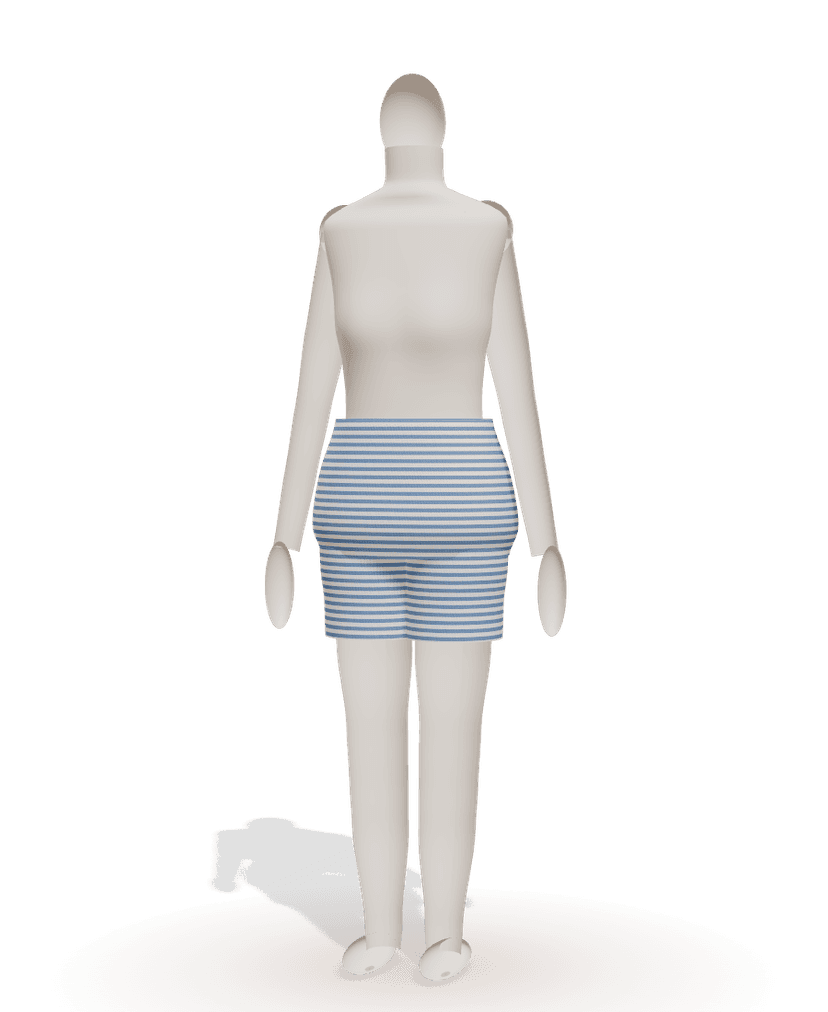
The 3D preview shows the proportions on a mannequin built from your numbers before you cut. Start with how to take your body measurements; the measuring assistant explains each one as you go.
Easy fabrics for a first project
Choose a stable woven cotton or linen: quilting cotton, cotton poplin, chambray or a medium-weight linen. They stay put under the needle, press flat and forgive a wobbly seam.
Leave slippery fabrics such as satin and viscose, stretchy knits and thick ones like denim for later projects. Pre-wash your fabric before cutting so the finished piece does not shrink, and see the best fabrics for beginners.
Frequently asked questions
What is the easiest thing to sew for a beginner?
A scrunchie or an envelope cushion cover: one or a few rectangles and straight seams, finished in under an hour. For a first garment, a gathered skirt with an elastic waist is the classic choice.
Do I need a serger to start sewing?
No. A regular sewing machine with straight and zigzag stitches sews every beginner pattern in Sewly, knits included. See finishing seams without a serger.
How long does it take to learn to sew?
Many beginners finish a first small project in an afternoon and a first garment within a few weeks of regular practice. Confidence with zips, sleeves and fitting comes over months. See how long it takes to learn to sew.
Can a beginner sew clothes?
Yes. Start with garments that pull on: a gathered skirt, pull-on shorts or trousers with an elastic waist. They teach seams, casings and hems without zips or buttonholes.
Is Sewly free for beginners?
The free plan includes 3 AI patterns and 20 AI messages a month, unlimited changes by hand, the 3D preview and the full sewing guide on screen. Printing patterns needs a Maker plan ($7.99 a month or $59 a year) or Atelier.
What will you sew next?
Bring the picture. Sewly brings the pattern.
Your pictures stay private and are only used to make your pattern.