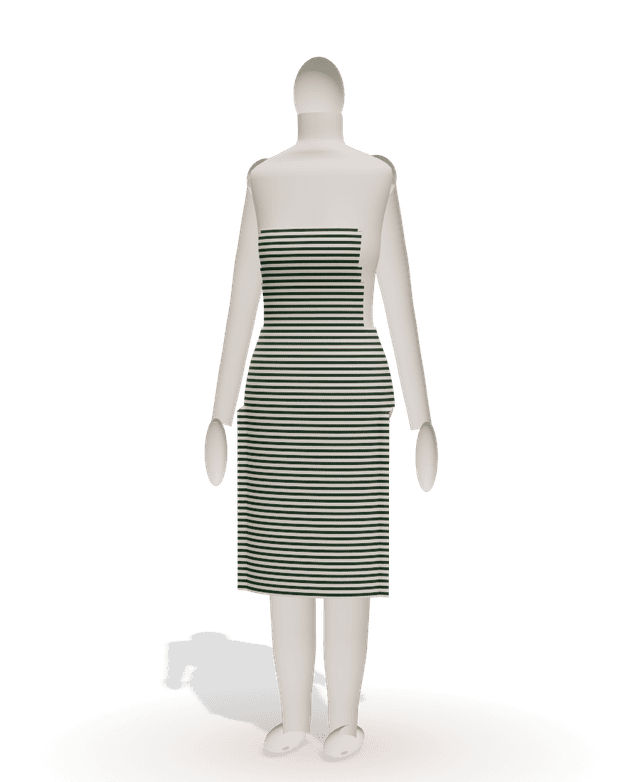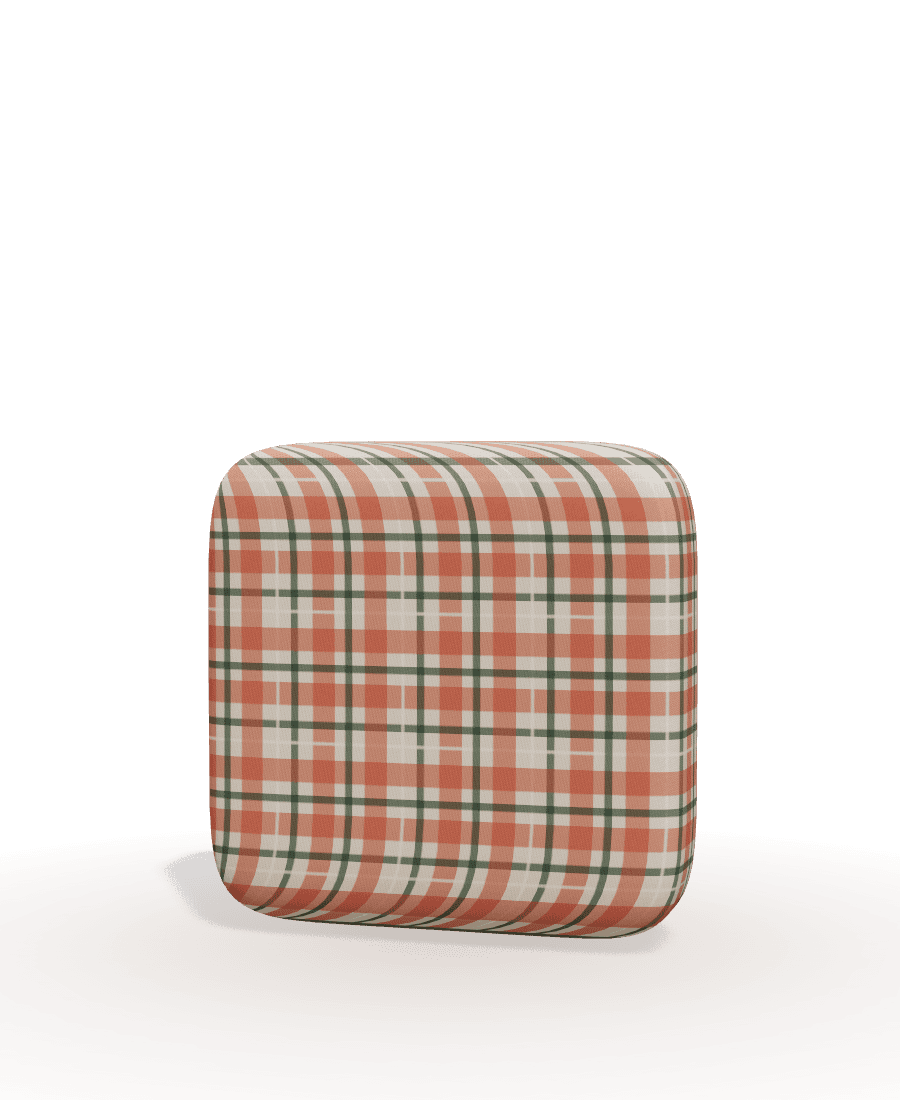
A cushion cover (a pillow cover, in American English) is a fabric case for a cushion insert, closed at the back so you can take it off to wash. The envelope back, made of two overlapping hemmed panels, needs no zip or buttons; a zipped back looks neater and holds the insert snugly. Sewly draws the cover to the size of your insert and cuts it slightly smaller, so the cushion fills it out instead of looking limp.
Cushion cover options
- Insert width: from 20 to 80 cm (8 to 31 1/2 in), 45 cm (18 in) by default.
- Insert height: from 20 to 80 cm (8 to 31 1/2 in), 45 cm (18 in) by default. Set different numbers for a rectangular or lumbar cushion.
- Closure: envelope back (default) or zip.
Measure your insert from seam to seam, flat, and enter those numbers: no need to add anything for seams or ease.
Best fabrics for cushion covers
Medium to heavy wovens that stand up to use: linen, cotton canvas, velvet, upholstery fabric or quilting cotton. Linen and canvas are easy to sew and wash well; pre-wash them so the cover does not shrink around the insert later. Velvet has a nap, so cut the front and back panels with the pile running the same way. Large prints look best centered on the front.
How hard is it to sew?
A beginner project. The envelope cover is three rectangles, two hems and one seam around the edge: under an hour once your fabric is cut. The zipped version adds a zip along the back and takes 1 to 2 hours. It is a good way to practice straight seams and corners before sewing clothes.
What's in the pattern
- Front, a rectangle the size of the cover
- Envelope version: back top and back bottom, two overlapping panels with hemmed edges
- Zip version: a single back panel and a zip a few centimeters shorter than the cover width
Most pieces are given as cutting dimensions, since they are plain rectangles: mark them on the fabric with a ruler and chalk. The guide gives the fabric quantity for 110, 140 and 150 cm (45, 55 and 60 in) wide fabric and a cutting layout.
How to sew an envelope cushion cover
- Pre-wash and press the fabric, then cut the front and the two back panels.
- Hem the overlapping edge of each back panel.
- Lay the front right side up, then the two back panels right side down, overlapping in the middle.
- Sew all around the edge, clip the corners and turn the cover right side out.
- Push the corners out gently, press and slip in the insert.
For the zipped version, the zip goes in first, then the cover is sewn around. Our project post sew envelope cushion covers for any insert shows both closures.
Frequently asked questions
How much fabric do I need for a cushion cover?
A 45 cm (18 in) envelope cover usually takes 0.5 to 1 m (5/8 to 1 1/8 yd) of 140 cm (55 in) wide fabric. A zipped cover uses a little less, since the back is a single panel; larger inserts need more. Sewly computes the exact quantity for your size and fabric width.
What size should a cushion cover be for my insert?
Enter the insert's own size. Sewly cuts the cover slightly smaller than the insert so it is filled out and plump, which is how shop-bought covers are made too.
Envelope back or zip: which is better?
The envelope back is quicker and needs no notions; it suits sofa cushions you wash often. A zip closes the back neatly and keeps a firm insert in place, so it suits large or decorative cushions.
Can I make a rectangular lumbar cushion cover?
Yes. Enter a different width and height, for example 30 × 50 cm (12 × 20 in), and the pattern follows.