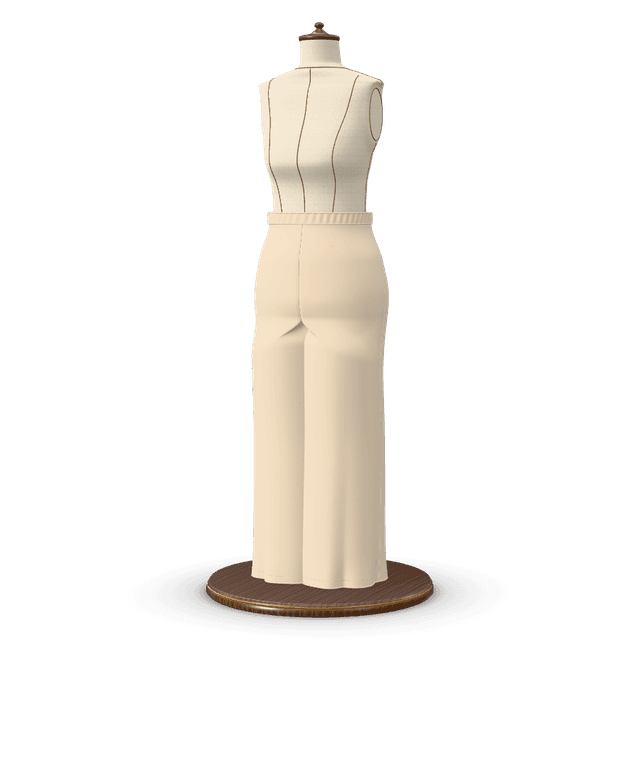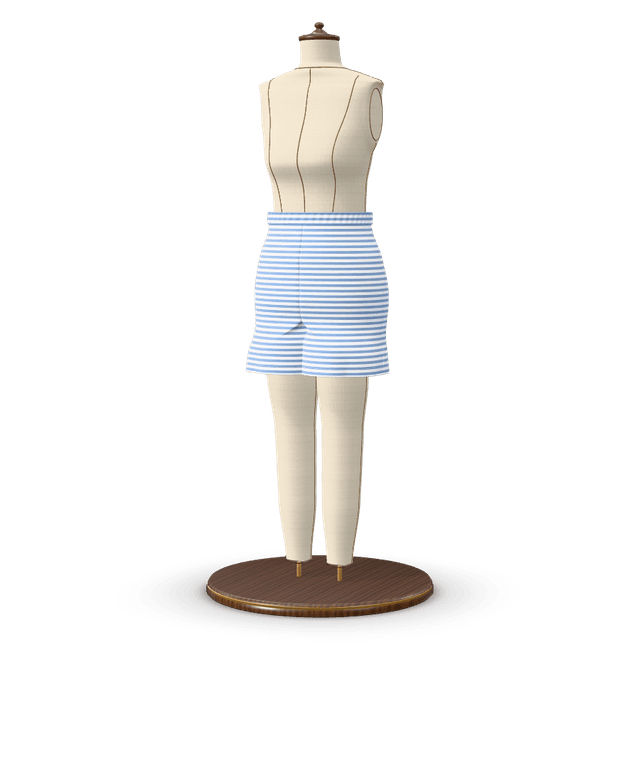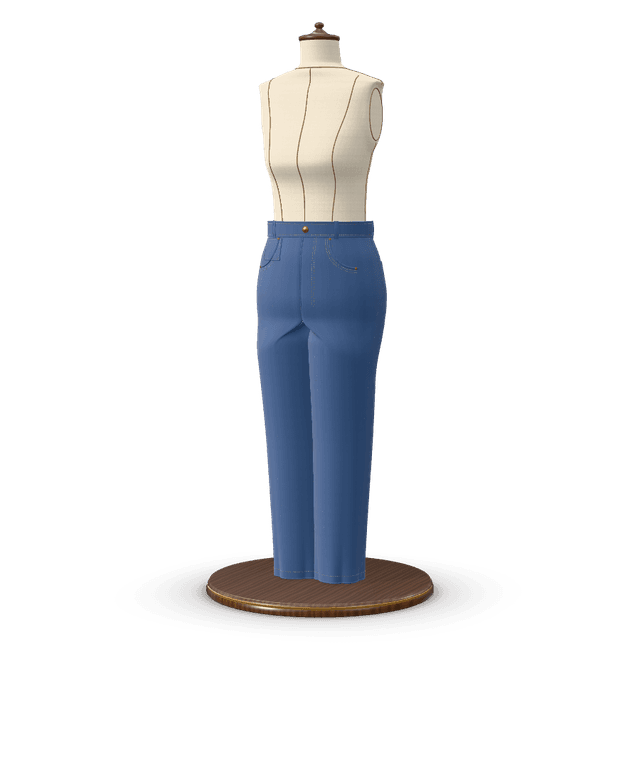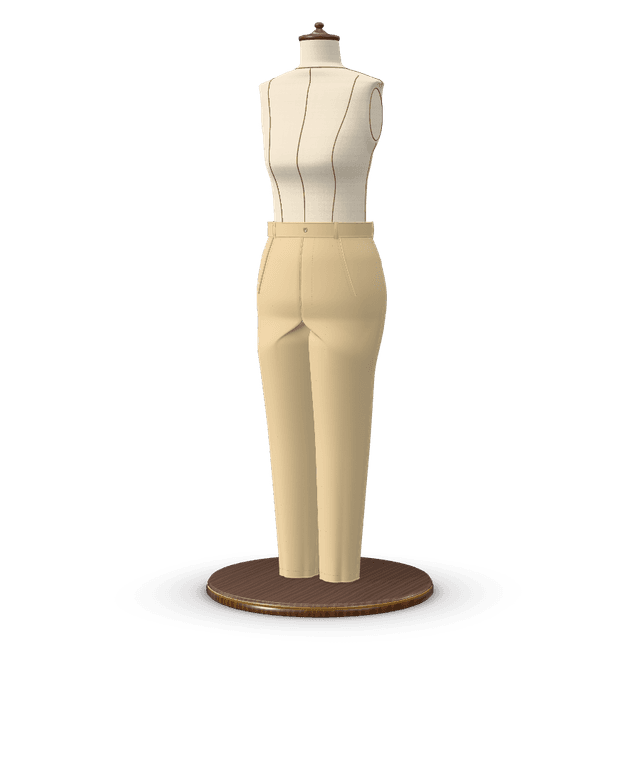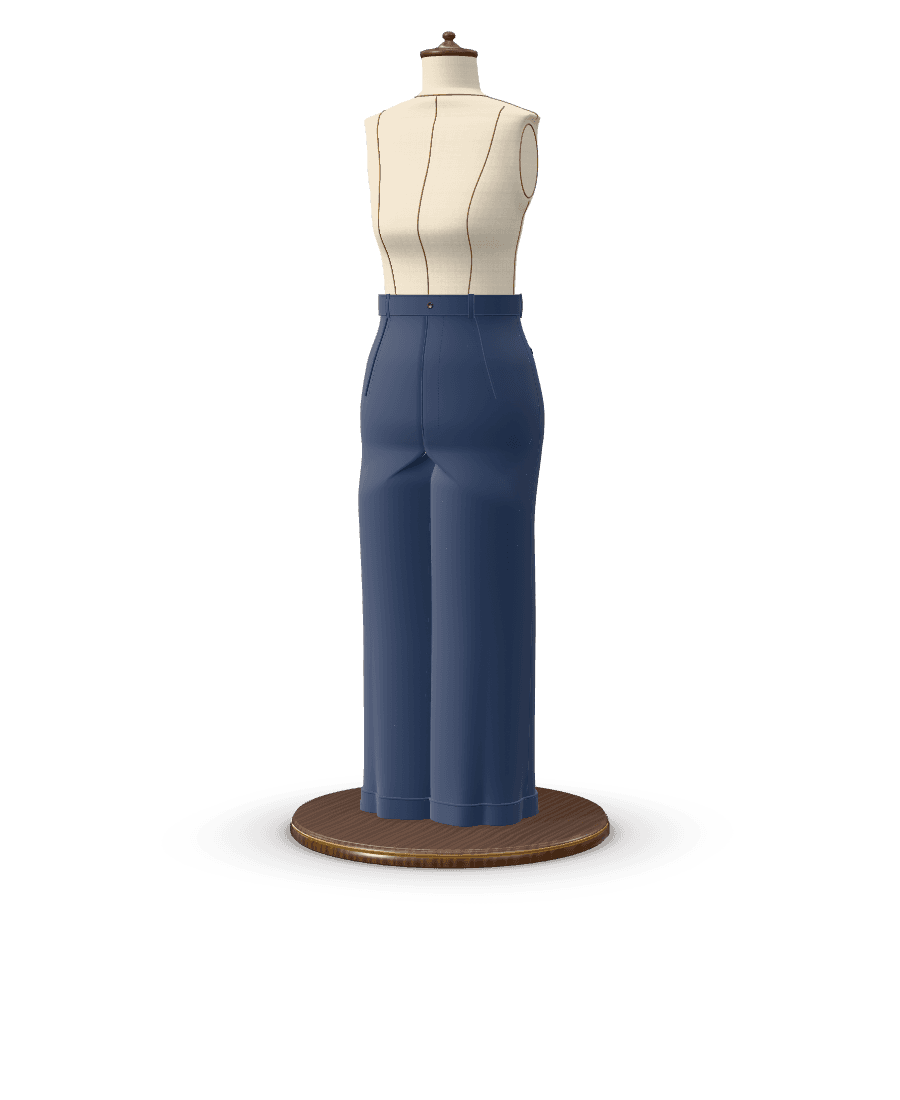
This pattern is a builder: it drafts any trousers or shorts from parts, and every option can be combined with every other. Jeans, chinos, cargo, carpenter and wide-leg trousers, flares and culottes are all combinations of the same choices. Sewly draws the crotch curve from your own waist, hip, thigh and seated crotch depth, then builds the rise, leg and details on it.
Start from a photo or from scratch
Upload a photo, paste a link to a pin or a shop page, or describe the trousers in words, and the AI picks the parts it sees: the rise, the leg shape, the length, the pockets, the pleats, the waistband and the hem. You can change any of them by hand afterwards, free and without limits. Two named presets start from this builder, jeans and chinos; for elastic-waist trousers in fewer steps, see the simpler pull-on trousers.
The parts you can combine
- Rise: low, mid (the default), high or extra high.
- Leg: skinny, slim, straight (default), bootcut, flare, wide, tapered, barrel, or jogger with ribbed cuffs.
- Length: short, mid-thigh, Bermuda, knee, capri, ankle or full (default), plus a length adjustment of up to 25 cm (10 in) either way.
- Fit: fitted, regular (default), relaxed or oversized, extra hip ease, and a stretch setting for wovens with 2 to 3 % elastane, which takes out ease so slim legs fit close.
- Waist: a straight waistband (default) or a contoured one, with the height you choose; an elastic waist, elastic with a drawstring, or a faced waist with no band.
- Closure: a zip fly with a fly shield (default), a button fly, a side or back invisible zip, or pull-on.
- Front pockets: slanted pockets (default), jeans scoop pockets with an optional coin pocket, in-seam pockets or patch pockets.
- Back and side pockets: welt pockets with a button (default), patch or flap pockets, or none; plus cargo pockets with flaps on the thighs.
- Shaping and details: back darts or a jeans back yoke, a flat front or one or two pleats, belt loops.
- Leg hem: plain, turn-up, rib cuff, elastic casing or side slit; topstitching automatic, gold, matching or none.
Some parts depend on others, and Sewly tells you when it adapts: a contoured waistband is drafted with a back yoke, a flat front and a fly, and a fitted waist with no opening gets a side zip.
Made to measure or a standard size
Use your own measurements or a standard size: women's EU 32–54 (US 0–22, UK 4–26), men's XS to 3XL, or children's 2 to 14 years. Measure your crotch depth sitting on a hard chair, from the waist down to the seat: it sets the rise and decides how comfortable the trousers feel. Our post on how to measure yourself for trousers shows where the tape goes.
Best fabrics for trousers
Wovens or knits, chosen for the style: denim for jeans, cotton twill or gabardine for chinos and work trousers, linen or Tencel for wide legs, wool flannel for tailored trousers, corduroy for winter, French terry for joggers.
How hard is it to sew?
From easy to experienced. Shorts with an elastic waist and in-seam pockets are a first project; a zip fly, welt pockets and flat-felled seams make trousers a project for confident sewists. The guide lists only your combination's steps, in order, and answers questions about any of them.
What's in the pattern
Fronts and backs, each cut as a pair, and the pieces your choices add: back yokes, pocket facings and pocket bags in pocketing, coin, patch, welt or cargo pockets and their flaps, a fly shield, a waistband with its underlap, a belt loop strip, cuffs or a drawstring. The guide lists each piece with its cut count, the notions with their quantities (a zip with its length, a button or jeans button and rivets, buttons, elastic, interfacing, topstitching thread), the fabric quantity for 110, 140 and 150 cm (45, 55 and 60 in) wide fabric, and a cutting layout.
How to sew trousers
Most combinations follow this order:
- Sew the back darts or attach the back yokes, and make the back pockets.
- Make the front pockets with their facings and bags.
- Sew the zip fly with its shield, or prepare the side or back zip.
- Sew the center back seam, the side seams and the inseams.
- Make the belt loops and attach the waistband, or sew the elastic casing.
- Hem the legs, sew the turn-ups or attach the cuffs.
- Make the buttonhole, set any hardware and press.
If a first pair pulls or folds, our post on fitting trousers explains what the wrinkles mean.
Frequently asked questions
Can I make cargo trousers?
Yes. Turn on the cargo pockets: patch pockets with buttoned flaps on the side of each thigh. Combine them with a relaxed fit, a straight or tapered leg and a straight or drawstring waist.
Which closure should I choose?
A zip fly is the usual choice on jeans and chinos, and a button fly suits workwear and vintage-style jeans. A side or back invisible zip gives a clean front on high-waisted or tailored trousers, and pull-on goes with an elastic or drawstring waist.
Can I make shorts with this pattern?
Yes. Choose the short, mid-thigh, Bermuda or knee length with any waist and pockets: tailored shorts with a fly, cargo shorts or pull-on shorts.
Is this trousers pattern free?
Designing the pattern, changing every part and measurement, the 3D preview and the sewing guide on screen are free; creating it from a photo uses one of the free plan's AI patterns. Printing the PDF needs a Maker plan ($7.99 a month or $59 a year) or an Atelier plan.