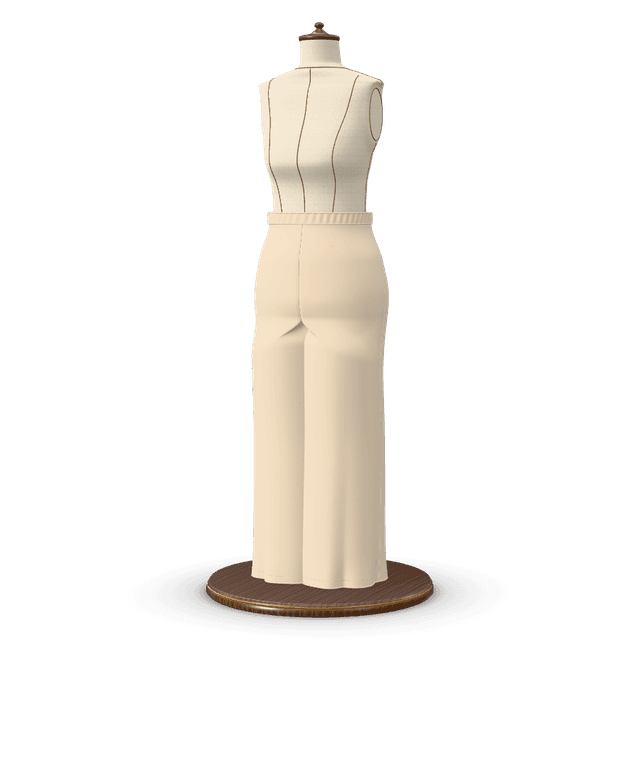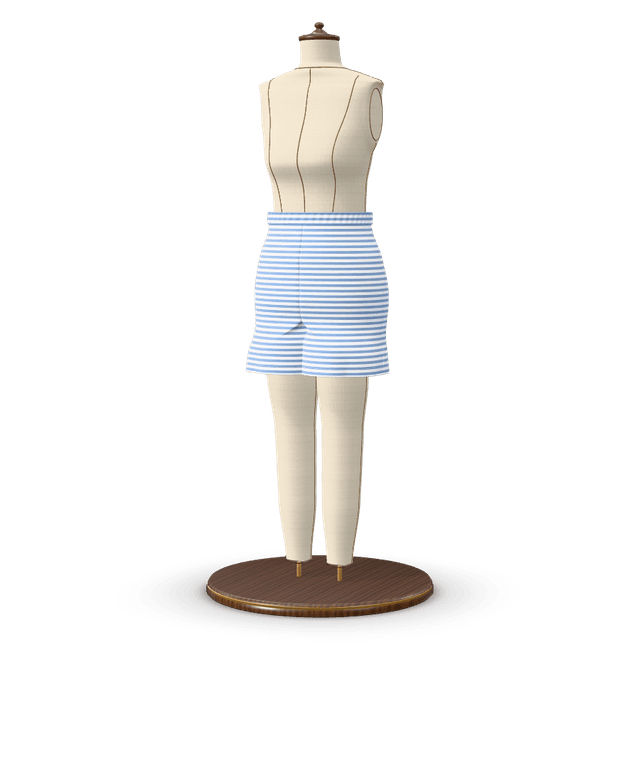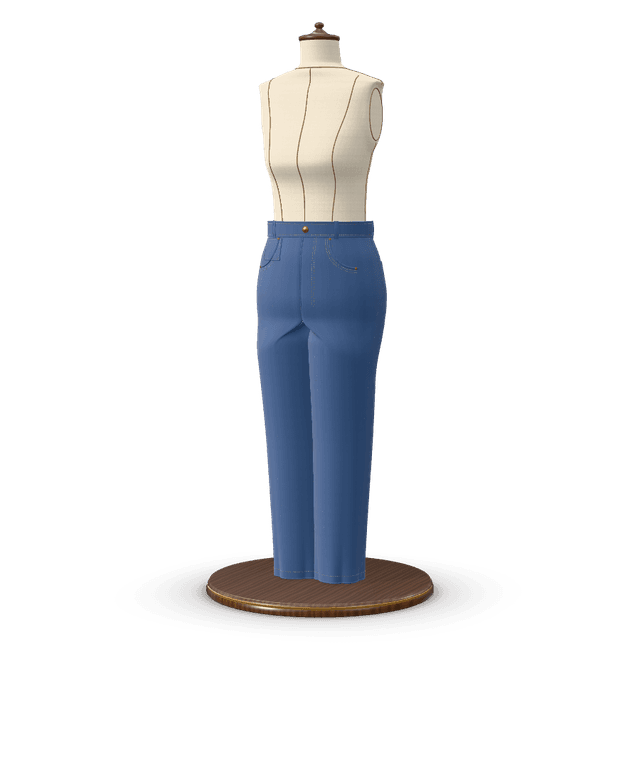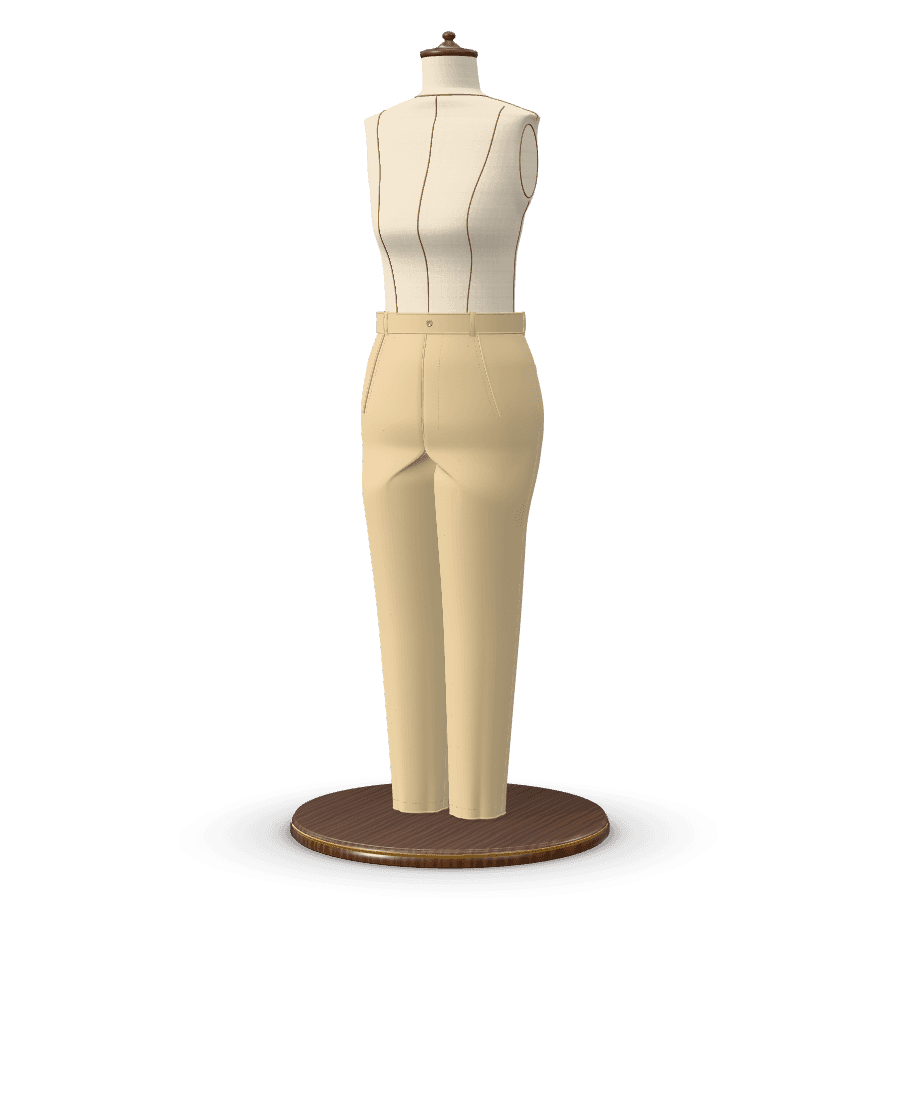
Chinos are tailored cotton trousers: a zip fly, slanted front pockets, welt pockets at the back closed with a button, darts at the back waist, a waistband and belt loops. In wool flannel or gabardine, with pleats and turn-ups, the same pattern makes suit trousers. Sewly drafts them from your waist, hip, thigh and seated crotch depth, so the rise and the seat fit before you choose the leg.
Chinos options
Every option redraws the pattern instantly, without using any AI:
- Leg: tapered (the default), skinny, slim, straight, bootcut, flare, wide or barrel.
- Rise: low, mid (default), high or extra high.
- Length: full (default), ankle for cropped chinos, or capri, knee, Bermuda, mid-thigh or short for chino shorts, plus a length adjustment of up to 25 cm (10 in) either way.
- Front: flat (default), or one or two pleats on each side.
- Fit: fitted, regular (default), relaxed or oversized, extra hip ease, and a stretch setting for twill with 2 to 3 % elastane.
- Pockets: slanted front pockets and buttoned welt back pockets by default; in-seam or patch front pockets, flap back pockets and cargo pockets are options.
- Hem: plain (default), turn-up or a side slit.
- Closure: a zip fly (default), a button fly, or a side or back invisible zip.
- Topstitching: none by default, for a clean tailored finish; matching or contrast if you want it.
Made to measure or a standard size
Use your own measurements or a standard size: women's EU 32–54 (US 0–22, UK 4–26), men's XS to 3XL, or children's 2 to 14 years. Measure your crotch depth sitting on a hard chair, from the waist down to the seat: it is the number that decides whether trousers feel comfortable. If a first pair pulls or folds, our post on fitting trousers explains what the wrinkles mean.
Best fabrics for chinos
Cotton twill and stretch chino twill for everyday chinos, gabardine or wool flannel for tailored trousers, linen for summer and corduroy for winter. Choose a fabric firm enough for the slanted pockets to lie flat; a twill with 2 to 3 % elastane makes slim legs more comfortable. Our post on sewing with twill covers needles and pressing.
How hard is it to sew?
A project for confident sewists. The fly front and the buttoned welt back pockets are the two techniques to learn; the rest is careful seams and pressing. Allow 10 to 12 hours, and sew a test welt pocket on a scrap first.
What's in the pattern
- Fronts with the fly extension cut on, and backs with their darts, each cut as a pair
- Pocket facings and four front pocket bags in pocketing
- Four back pocket jettings and four back pocket bags
- Fly shield
- Waistband with its underlap, and a belt loop strip, both given as cutting dimensions
Notions: a trouser zip, a button or trouser hook and bar for the waistband, two 12 mm (1/2 in) buttons for the back pockets, and fusible interfacing for the waistband and fly. The guide lists each piece with its cut count, the notions with their quantities, the fabric quantity for 110, 140 and 150 cm (45, 55 and 60 in) wide fabric, and a cutting layout.
How to sew chinos
- Fuse the interfacing and sew the back darts.
- Make the buttoned welt pockets on the backs.
- Make the slanted front pockets with their facings and bags.
- Sew the zip fly with its shield, then the center back seam.
- Sew the side seams and the inseam.
- Make the belt loops and attach the waistband with its underlap.
- Hem the legs or sew the turn-ups, make the buttonholes and press.
Our post on how to sew welt pockets walks through the back pockets, the step most people practice first.
Frequently asked questions
How much fabric do I need for chinos?
Full-length adult chinos usually take 1.7 to 2 m (1 7/8 to 2 1/4 yd) of 140 to 150 cm (55 to 60 in) wide fabric in Sewly's cutting layouts, plus pocketing for the bags. Shorts and children's sizes need less, 110 cm (45 in) wide fabric more. Sewly computes the exact quantity for your size and fabric width.
Can I make pleated or suit trousers?
Yes. Choose one or two pleats, a straight or wide leg and turn-ups, in wool flannel or gabardine. Pleats go with the straight waistband, which is the default.
What is the difference between the chinos and the jeans pattern?
Both come from the same trousers builder. Chinos have slanted pockets, welt back pockets, back darts and a clean finish; jeans have scoop pockets, patch back pockets, a back yoke, flat-felled seams, topstitching and rivets.
Can I make chino shorts?
Yes. Choose the short, mid-thigh, Bermuda or knee length and keep the fly, the slanted pockets and the welt back pockets. A turn-up hem suits shorts well.