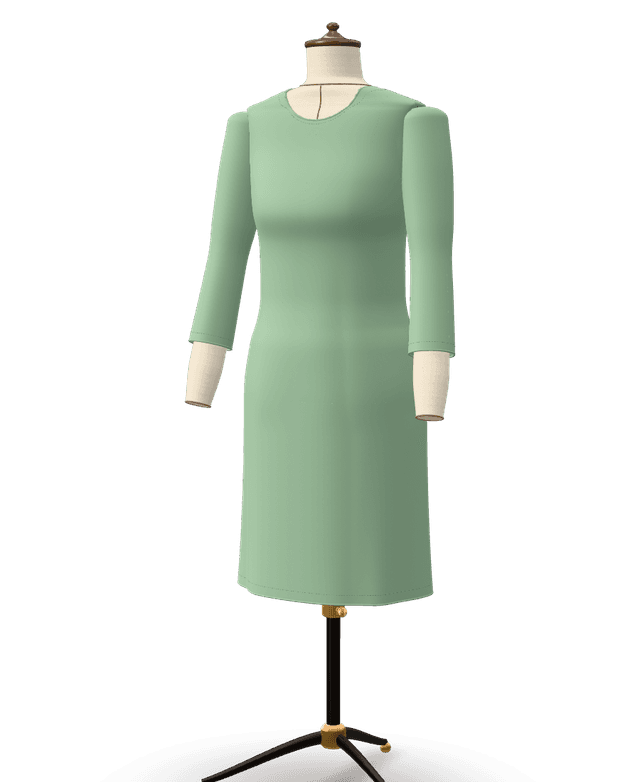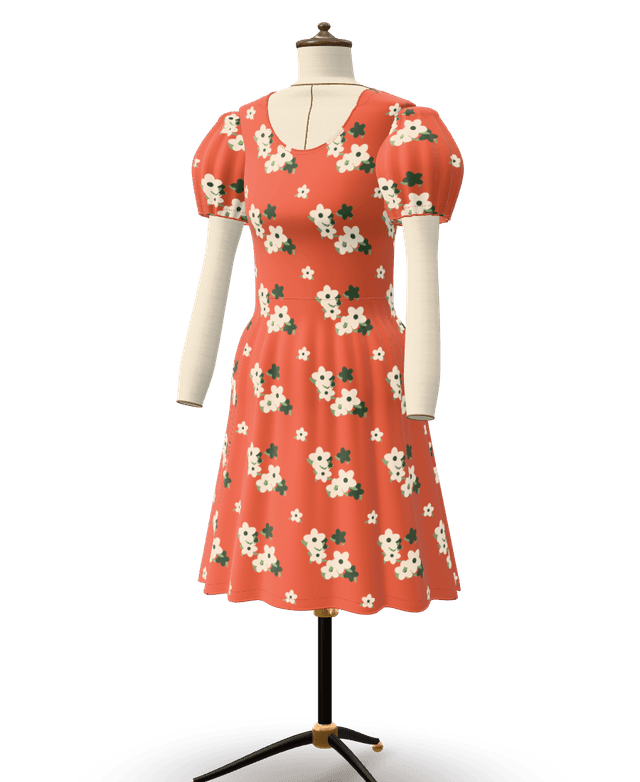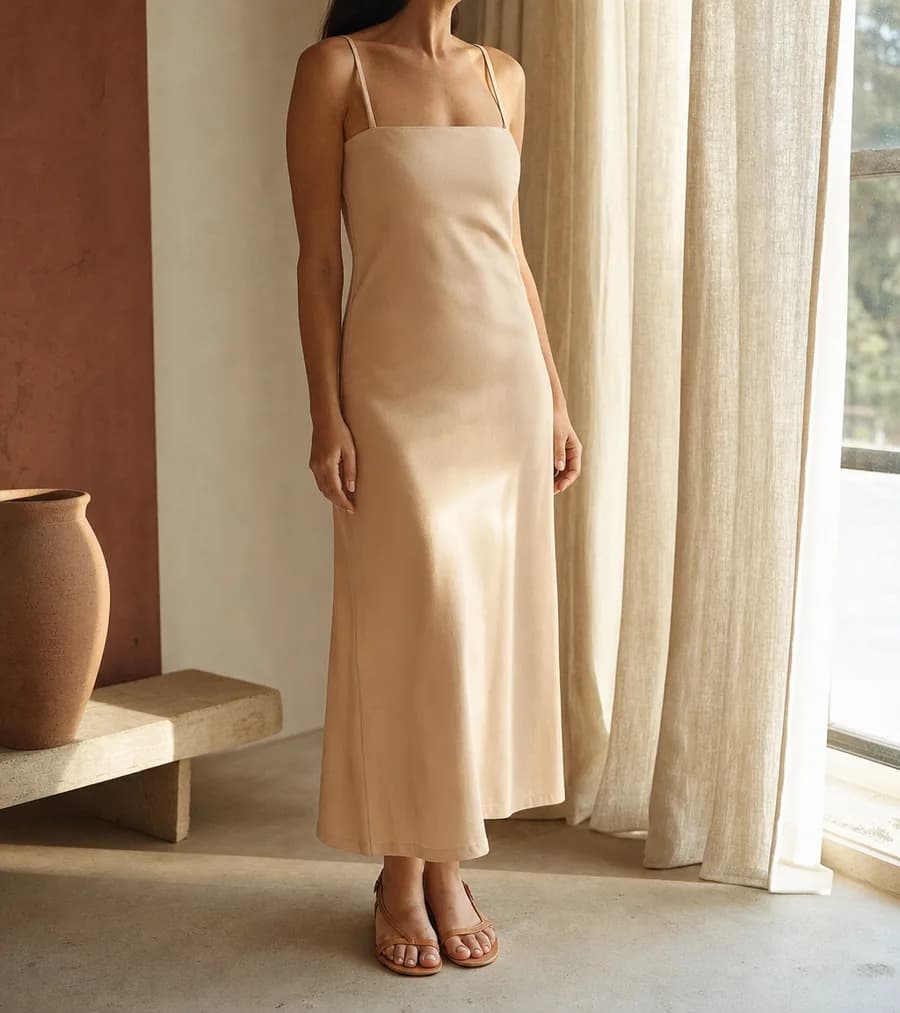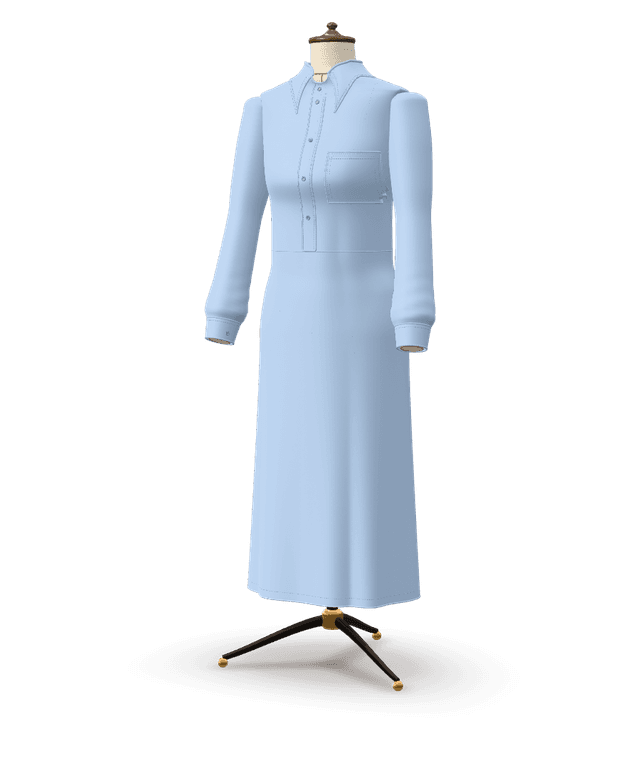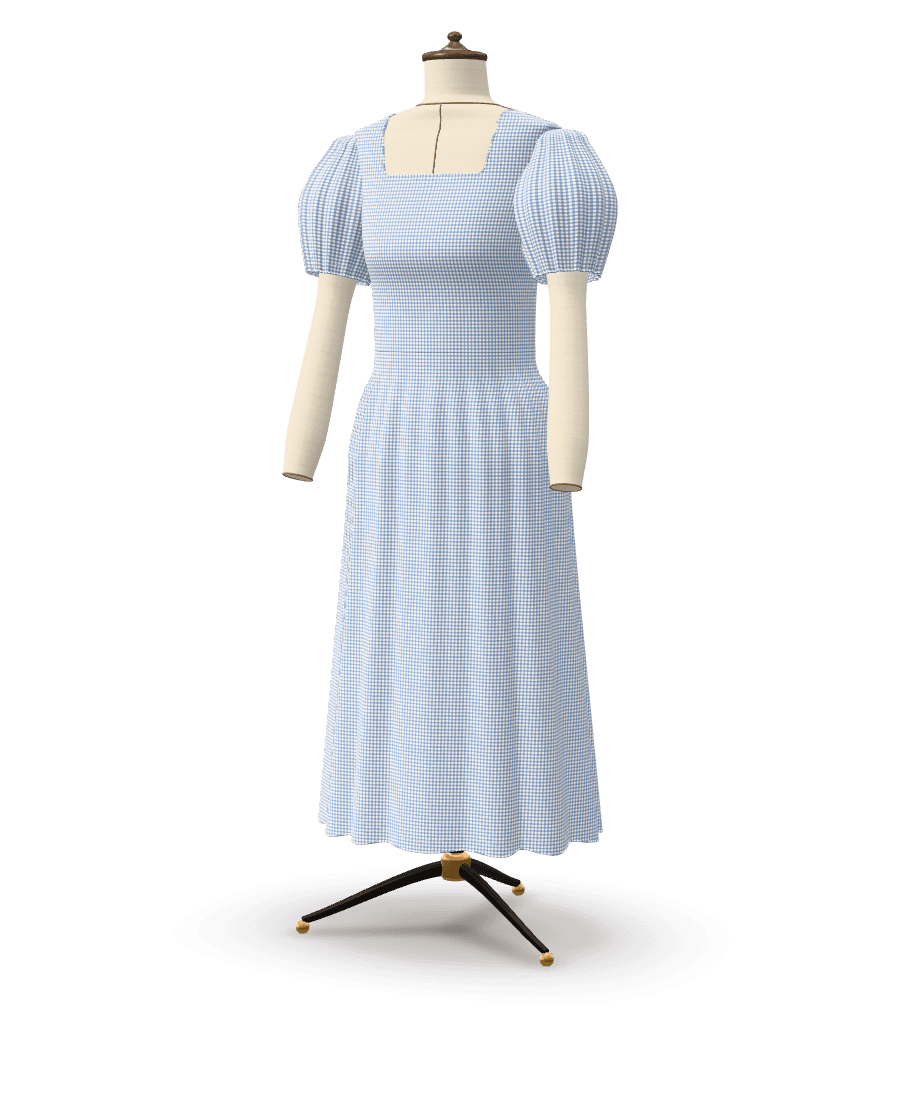
This pattern is a builder: it drafts any dress from a bodice and a skirt, and every option can be combined with every other. A sheath dress, a wrap dress, an empire maxi, a drop-waist dress or a prairie dress with a tiered skirt and a ruffle is a set of choices, not a separate pattern. Sewly drafts the bodice from your bust, waist, shoulders and back waist length, then cuts the skirt to the bodice's own waist seam, so the two always meet.
Start from a photo or from scratch
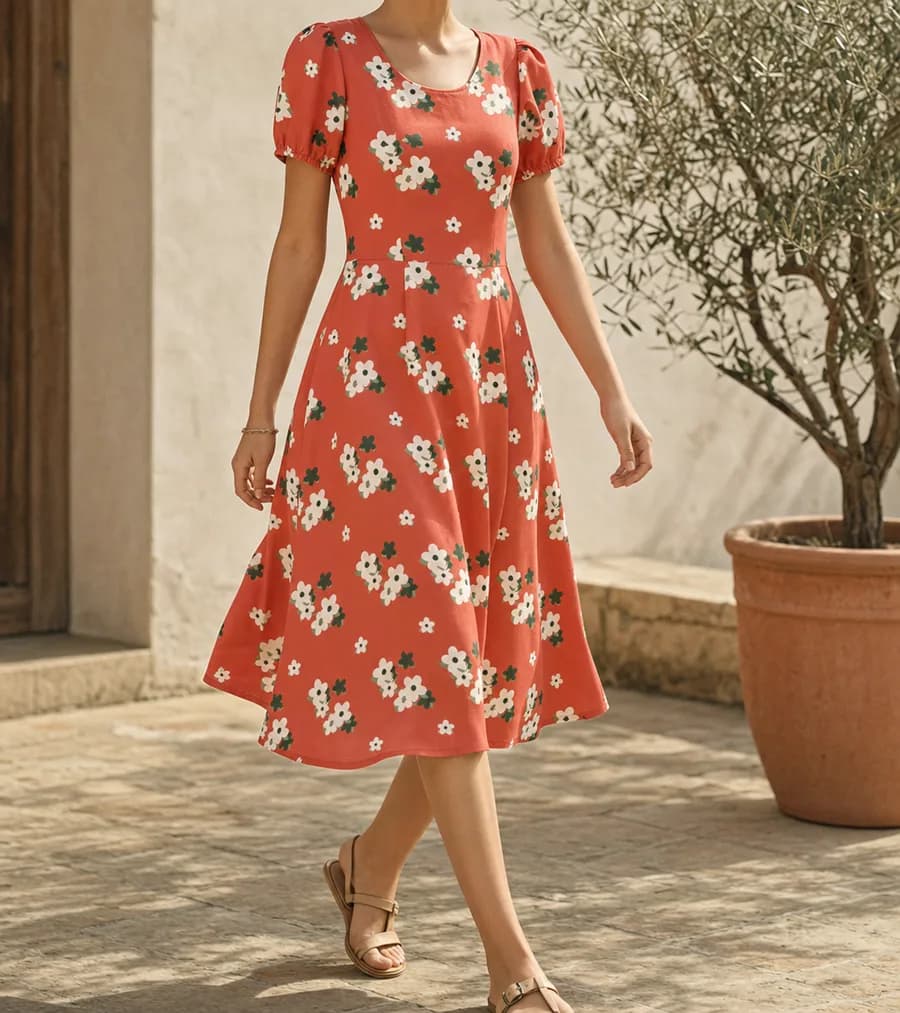
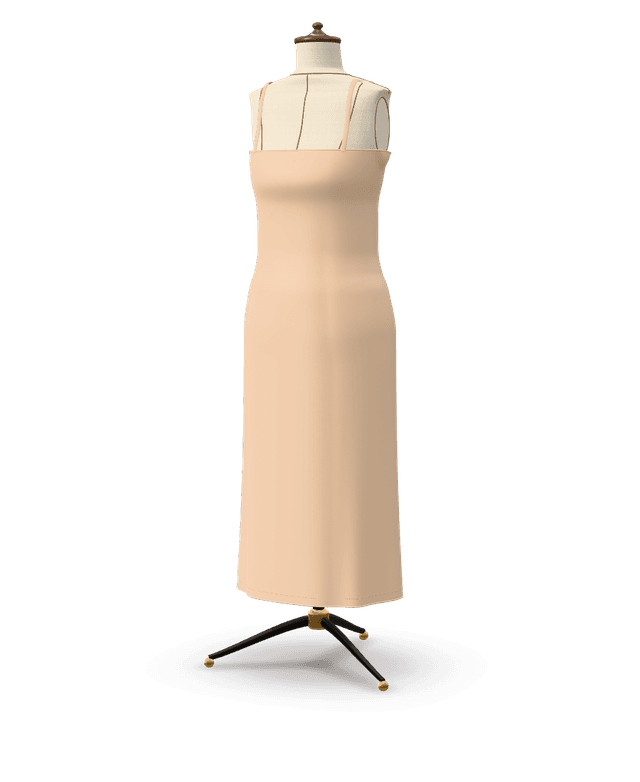
Upload a photo, paste a Pinterest or Instagram link, or describe the dress in words, and the AI picks the parts it sees: the waist seam, the neckline or collar, the opening, the sleeves, the skirt shape, the length and the pockets. You can then change any of them by hand, free and without limits. The shirt dress is this same builder with a shirt's defaults, while the shift, fit-and-flare and slip dresses are simpler patterns with fewer options.
The parts you can combine
- Waist seam: none, for a dress cut in one from the shoulders (shift, sheath, shirt or coat dress); the natural waist (the default); empire, under the bust; or dropped, at the high hip.
- Bodice: fitted (default), regular, relaxed or oversized, with extra chest ease; darts, princess seams or side panels; straight, curved or pointed front and back yokes.
- Neckline or collar: a round, high, scoop, V, boat, square or sweetheart neckline with depth and width adjustments, or a shirt collar on a stand, a band, camp, Peter Pan, tie or rib collar, or a lined hood.
- Opening: a back zip (default), buttons or snaps down the front, or a wrap front with ties.
- Sleeves: none, cap, short (default), elbow, three-quarter or long; set-in, dropped, raglan or kimono; fitted, straight, puff, bell or bishop; hemmed or finished with buttoned cuffs, bands or elastic.
- Skirt: straight, pencil, A-line (default), trumpet, half circle, full circle, gathered, tiered or pleated, in 2 to 8 panels, with the flare or gathering ratio you choose.
- Length: mini, above the knee, knee (default), midi or maxi, plus a length adjustment of up to 25 cm (10 in) either way.
- Details: in-seam or patch pockets, a back vent or a slit, a ruffle at the hem, a shirttail hem, a tie belt and a lined bodice.
Made to measure or a standard size
Use your own measurements or a standard women's size, EU 32–54 (US 0–22, UK 4–26), or a children's size from 2 to 14 years. With darts on automatic, women's woven dresses get bust darts unless they are oversized; princess seams or side panels take the shaping when you choose them. Our post on how to measure yourself for a dress lists the numbers that matter most.
Best fabrics for a dress
Cotton poplin, linen, chambray and cotton lawn for day dresses; viscose and crepe for wrap dresses and swinging skirts; satin for evening; jersey for knit dresses. Circle and trumpet skirts need drape, while gathered and tiered skirts look best in crisp, light cottons.
How hard is it to sew?
From intermediate to confident, depending on the parts. A dress cut in one with a neck facing and short sleeves makes a good first dress; a collar on a stand, a button front from neck to hem or a full circle skirt add time and care. The guide gives the steps of your dress only, in order.
What's in the pattern
The bodice pieces (front, back, panels, yokes), the sleeves and their cuffs, the collar or neck facings, the skirt pieces for your shape, pocket bags and any ties or belt. Long rectangles such as gathered panels, tiers and ties are given as cutting dimensions to save paper. The guide lists each piece with its cut count, the notions with their quantities (an invisible zip with its length, buttons, interfacing, elastic), the fabric quantity for 110, 140 and 150 cm (45, 55 and 60 in) wide fabric, and a cutting layout.
How to sew a dress
For a dress with a waist seam, the guide follows this order:
- Staystitch the neckline, sew the darts or panel seams and join the shoulders.
- Attach the collar or the neck facing.
- Set in the sleeves and close the bodice side seams.
- Make the skirt: darts or gathers, in-seam pockets and side seams.
- Join the skirt to the bodice and insert the zip.
- Hem, make any buttonholes and press.
For the zip, see how to insert an invisible zip.
Frequently asked questions
How much fabric do I need for a dress?
A knee-length dress with short sleeves and an A-line skirt usually takes 1.6 to 2 m (1 3/4 to 2 1/4 yd) of 140 to 150 cm (55 to 60 in) wide fabric. Long sleeves, a maxi length, a circle or tiered skirt, or 110 cm (45 in) wide fabric need more. Sewly computes the exact quantity for your design, size and fabric width, with a cutting layout.
Can I make a wrap dress?
Yes. Choose the wrap front with ties as the opening: the bodice fronts cross over and the skirt wraps with them. A V-neckline, a fitted bodice and a viscose or jersey give the classic wrap dress.
Can I sew a knit dress with this pattern?
Yes. Jersey works well for a dress cut in one that pulls over the head with no opening. A dress with a waist seam needs an opening to get into, so Sewly adds a back zip if you leave it out.
Is this dress pattern free?
Designing the pattern, changing every part and measurement, the 3D preview and the sewing guide on screen are free; creating it from a photo uses one of the free plan's AI patterns. Printing the PDF needs a Maker plan ($7.99 a month or $59 a year) or an Atelier plan.